The Power of Judgment and the Wisdom of Self-Reflection

Father, I Pray whoever is reading this,
That your divine power and love
be filled in their minds hearts and souls
In Jesus Name.

In the intricate fabric of human interactions, the concept of judgment weaves a complex pattern that extends across every facet of our lives. Grounded in age-old teachings and sacred scriptures, the act of passing judgment is a profound reflection of our moral compass, both individually and within the context of our fellow brethren.

The Bible, a timeless source of spiritual guidance, illuminates the idea of judgment in multifaceted ways. “Judge not, that ye be not judged,” (Matthew 7:1) cautions us against hasty condemnation, reminding us of the interconnectedness of our own actions and opinions. This verse resonates as a call for empathy, inviting us to embrace a non-judgmental stance towards others. Similarly, “Let him who is without sin among you be the first to throw a stone” (John 8:7) underscores the fallibility of human judgment, urging us to consider our own imperfections before casting blame upon others.

In the realm of communal relations, facing judgment from our own brethren is a potent experience that can lead to profound introspection. Such encounters, often rooted in well-meaning concern, encourage us to scrutinize our actions and beliefs. This act of self-reflection becomes a mirror, allowing us to glimpse our own biases and limitations. It is a moment to recall the scripture, “Why do you see the speck that is in your brother’s eye, but do not notice the log that is in your own eye?” (Matthew 7:3), reminding us that our discernment can be clouded by our own shortcomings.

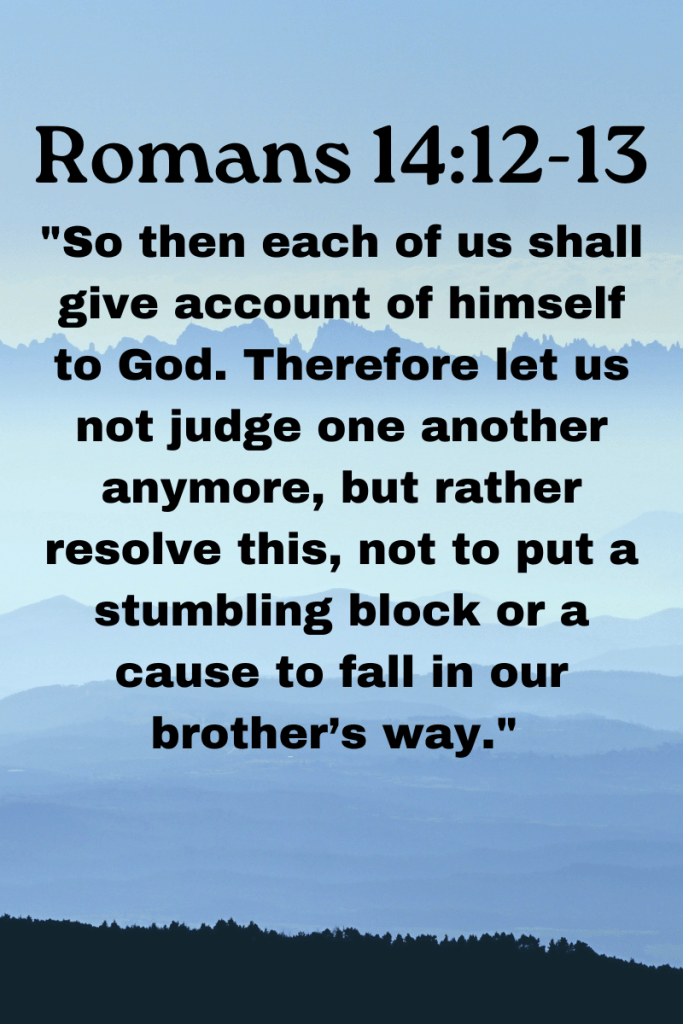
When confronted with judgments from within our own community, responding with open-hearted dialogue can pave a path toward unity. This approach aligns with the teachings of the Bible: “Therefore let us stop passing judgment on one another. Instead, make up your mind not to put any stumbling block or obstacle in the way of a brother or sister.” (Romans 14:13) By engaging in meaningful conversations, we dismantle the barriers of misperception and miscommunication, fostering an environment of mutual growth and understanding.

The intricate tapestry of judgment unfolds as a testament to our shared humanity. Drawing inspiration from sacred scriptures, we are reminded of the wisdom of empathy and the pitfalls of hasty judgment. As we navigate the delicate threads of judgment within our own circles, let us heed the timeless teachings of self-awareness, dialogue, and compassion. In doing so, we contribute to a world where understanding triumphs over division, and unity prevails over discord.

Remember, Satan Is A Liar!

God Is Not Microwavable!

Father, I Pray whoever is reading this,
That your divine power and love
be filled in their minds hearts and souls
In Jesus’ Name.

Have you ever heard the phrase “God is not microwavable”? At first glance, this statement may seem confusing or even nonsensical. But upon further reflection, it can be a powerful reminder of the importance of patience, perseverance, and trust in the journey of faith.

In our fast-paced, instant-gratification culture, we are accustomed to getting what we want quickly and easily. We have microwaves that can cook a meal in minutes, smartphones that can connect us to the world in seconds, and delivery services that can bring us almost anything we desire within hours. It’s no wonder that we often expect the same kind of instant results in our spiritual lives.

We may pray for something and expect an immediate answer. We may strive to live a holy life for a short period and then become frustrated when we don’t see the results we hoped for. We may even lose faith altogether if God doesn’t seem to be responding to our requests or if we face challenges and hardships that we can’t understand.

But the truth is that God’s ways are not our ways, and his timing is not our timing. Just as you cannot microwave everything and expect it to turn out perfectly, some things in life require a more measured and deliberate approach. God is not a genie who grants our every wish on demand, nor is he a vending machine that dispenses blessings for a few coins.

Instead, God invites us to trust him and to walk with him in faith, even when we don’t understand or when the journey is difficult. He asks us to be patient and to wait for his timing, knowing that his plans for us are good and that he is always working for our ultimate good, even when we can’t see it.

In the Bible, we see many examples of people who had to wait patiently for God’s promises to be fulfilled. Abraham and Sarah had to wait decades for the birth of their son Isaac. Moses spent 40 years in the desert before he was ready to lead the Israelites out of slavery. Joseph endured years of slavery and imprisonment before he became second in command of Egypt.

These stories remind us that God’s timing is perfect, even if it doesn’t align with our expectations or desires. They also show us that God is faithful to his promises and that he never abandons us, even in the darkest moments of our lives.

So the next time you feel like giving up on your faith or like God isn’t listening to your prayers, remember that God is not microwavable. Trust in his plan, be patient in the waiting and know that he is always with you, guiding you toward his perfect will for your life.

Remember, Satan Is A Liar!

From Ashes to Beauty: Redemption Stories in Christ

Father, I Pray whoever is reading this,
That your divine power and love
be fill in their minds hearts and souls
In Jesus’ Name.

Welcome to “From Ashes to Beauty,” a blog dedicated to sharing powerful redemption stories found in the transformative work of Christ. Life often presents us with trials, brokenness, and moments of despair, but through the redemptive power of Jesus, beauty can emerge from the ashes. In this blog, we will explore stories of individuals who have experienced healing, restoration, and transformation through their encounters with Christ. May these stories inspire hope, ignite faith, and remind us that no situation is beyond the reach of God’s redeeming love.

The Depths of Brokenness

In the journey toward redemption, acknowledging the depths of brokenness is often the first step. We will explore stories of individuals who have faced challenges such as addiction, loss, abuse, or despair. Through their testimonies, we will witness how God meets us in our brokenness, extends His grace, and sets the stage for transformation and restoration.

Encountering God’s Redeeming Love

God’s redeeming love is a powerful force that can turn even the most hopeless situations into something beautiful. Through these stories, we will witness how individuals encountered the love of Christ in the midst of their pain and brokenness. Whether it was through divine intervention, a heartfelt encounter, or a gradual revelation of God’s love, these stories will highlight the power of God’s grace to bring about healing and restoration.

Transformation and Restoration

Redemption goes beyond mere healing—it involves a radical transformation and restoration of lives. We will delve into stories of individuals who have experienced profound change as they surrendered their brokenness to Christ. These stories will demonstrate how God can take the ashes of our past and transform them into a testimony of His love, grace, and power. They serve as a reminder that no situation is beyond redemption when placed in the hands of a loving and mighty God.

Finding Purpose in the Journey

Redemption stories not only showcase the transformative work of Christ but also highlight the purpose that emerges from the process. We will explore how individuals discovered their purpose and calling through their redemptive experiences. These stories will inspire us to seek God’s guidance, trust His plan, and step into the unique purpose He has for each of us.

Offering Hope to Others

Redemption stories are not meant to be kept hidden; they are meant to be shared. As we witness the transformative power of Christ, we will be encouraged to extend hope, compassion, and grace to those around us. These stories will remind us of our role in being vessels of God’s love and agents of redemption in the lives of others.

“From Ashes to Beauty: Redemption Stories in Christ” is a blog post that celebrates the incredible power of God to redeem and restore. Through real-life stories of transformation, we will witness the beauty that emerges from the depths of brokenness when touched by the loving hands of Christ. May these stories inspire you, ignite your faith, and remind you that no situation is beyond the reach of God’s redeeming love. May they also empower you to share the hope of redemption with others, so that they too may experience the transforming power of Christ in their lives.

The following scriptures remind us of the transformative power of God’s redemption and the beauty He brings into our lives.

In him we have redemption through his blood, the forgiveness of our trespasses, according to the riches of his grace.

Ephesians 1:7 (ESV)

This verse reminds us that our redemption comes through the sacrificial blood of Jesus Christ, which brings forgiveness for our sins. It highlights the incredible richness of God’s grace and His willingness to redeem and restore us.

He has rescued us from the dominion of darkness and brought us into the kingdom of the Son he loves, in whom we have redemption, the forgiveness of sins.

Colossians 1:13-14 (NIV)

These verses affirm that through Christ, we are rescued from the power of darkness and brought into God’s kingdom. It emphasizes that redemption includes not only forgiveness but also a transformation of our spiritual state.

and provide for those who grieve in Zion—to bestow on them a crown of beauty instead of ashes, the oil of joy instead of mourning, and a garment of praise instead of a spirit of despair. They will be called oaks of righteousness, a planting of the Lord for the display of his splendor.

This scripture speaks of God’s ability to bring beauty out of ashes. It promises that He will replace mourning with joy and despair with praise. It symbolizes a transformation from a place of brokenness and sorrow to a state of beauty and honor, all for the display of God’s splendor.

Isaiah 61:3 (NIV)

Remember, Satan Is A Liar!

Failure Is Before Victory!

Father, I Pray whoever is reading this,
That your divine power and love
be filled in their minds hearts and souls
In Jesus’ Name.

The concept that failure often precedes victory can be observed in various biblical narratives and teachings. While the exact phrase “failure is before victory” may not be explicitly stated in the Bible, the principle of experiencing setbacks or challenges before achieving success is evident. Here are a few examples:

  1. Joseph’s story (Genesis 37-50): Joseph faced numerous failures and setbacks, such as being sold into slavery by his brothers and later being falsely accused and imprisoned. However, through God’s providence and Joseph’s unwavering faith, he eventually rose to a position of power in Egypt, saving his family and becoming a symbol of triumph over adversity.
  2. David and Goliath (1 Samuel 17): David, a young shepherd boy, faced the seemingly insurmountable challenge of defeating the giant warrior Goliath. Despite initial doubt and the ridicule of others, David relied on God’s strength and defeated Goliath, leading to his eventual rise as the king of Israel.
  3. The crucifixion and resurrection of Jesus (Matthew 27-28): The crucifixion of Jesus appeared to be a significant failure and defeat, as He was mocked, crucified, and buried. However, His resurrection on the third day brought about the ultimate victory over sin and death, fulfilling God’s plan for salvation.

These examples demonstrate that failure and hardship can be stepping stones toward eventual victory. They highlight the importance of perseverance, faith, and trust in God even in the face of adversity. The Bible teaches that God can work through failures and turn them into opportunities for growth, redemption, and ultimate triumph.

Remember, Satan is a Liar!

Accountability to God

Father, I Pray whoever is reading this,
That your divine power and love
be fill in their minds hearts and souls
In Jesus Name.

As a Christian, accountability can be understood as the act of taking responsibility for one’s actions and choices in alignment with biblical principles and values. It involves acknowledging that we are accountable to God for our thoughts, words, and deeds, as well as being accountable to others within the Christian community.

In Christianity, accountability can be seen as a vital aspect of spiritual growth and living a life that honors God. Here are some key elements of accountability as a Christian:

  1. Personal Accountability: Christians believe that each individual is accountable to God for their actions and attitudes. This includes taking responsibility for one’s sins, confessing them to God, seeking His forgiveness, and striving to live in obedience to His commandments.
  2. Biblical Standards: Christians look to the Bible as their guide for moral and ethical behavior. Accountability involves aligning one’s life with the teachings and principles found in Scripture, recognizing God’s authority over every aspect of life.
  3. Community Accountability: Christians believe in the importance of being part of a community of believers. Within this community, there is an emphasis on supporting and encouraging one another in the pursuit of righteousness. Christians are called to hold each other accountable, lovingly confronting and admonishing fellow believers when they stray from God’s truth.
  4. Confession and Repentance: Accountability involves a willingness to acknowledge one’s mistakes, sins, and shortcomings before God and others. Confession is an essential part of the Christian faith, as it allows individuals to receive forgiveness, experience spiritual healing, and grow in their relationship with God and fellow believers.
  5. Mentoring and Discipleship: Christians often seek out mentors or spiritual leaders who can provide guidance, wisdom, and accountability in their journey of faith. These relationships help foster personal growth, challenge areas of weakness, and encourage living in a manner that honors God.
  6. Final Judgment: Christians believe in the ultimate accountability before God’s judgment. They understand that, in the end, everyone will give an account of their lives before God. This belief serves as a motivation to live faithfully and responsibly in all areas of life.

Overall, accountability as a Christian involves recognizing one’s responsibility to God, living in accordance with biblical principles, participating in a supportive Christian community, seeking forgiveness and repentance, and looking forward to the final judgment before God. It is a way of living that reflects a deep commitment to following Christ and growing in faith.

Remember, Satan Is A Liar!

Benefits of Spiritual Growth

Father, I Pray whoever is reading this,
That your divine power and love
be filled in their minds hearts and souls
In Jesus’ Name.

Romans 12:2 is a powerful scripture that speaks to the process of spiritual growth. In the New International Version (NIV) of the Bible, it reads as follows:

“Do not conform to the pattern of this world, but be transformed by the renewing of your mind. Then you will be able to test and approve what God’s will is—his good, pleasing, and perfect will.”

This verse encourages believers to resist the influence of the world and instead focus on transforming their minds in alignment with God’s will. Let’s break down the key points of this scripture and how it relates to spiritual growth:

  1. Non-conformity: The verse advises against conforming to the patterns and values of the world. It calls for a mindset that is distinct from worldly influences, norms, and behaviors. This can involve questioning societal expectations and prioritizing spiritual principles over worldly desires.
  2. Mind Renewal: The scripture emphasizes the importance of renewing one’s mind. This refers to a deliberate process of transforming one’s thoughts, beliefs, and attitudes through spiritual practices, meditation, prayer, and studying scriptures. By renewing the mind, individuals can align their thinking with God’s truth and gain a deeper understanding of His will.
  3. Transformation: As the mind is renewed, spiritual transformation occurs. This transformation encompasses a holistic change that affects one’s thoughts, emotions, behaviors, and character. It involves growing in virtues such as love, compassion, forgiveness, and righteousness, which reflect the nature of Christ.
  4. Discerning God’s Will: The verse highlights that through this process of non-conformity and mind renewal, individuals become better equipped to discern and understand God’s will. Spiritual growth enables believers to develop a deeper understanding of God’s purposes and align their lives accordingly. It allows them to make choices that are in line with His good, pleasing, and perfect will.

Overall, Romans 12:2 serves as a guiding principle for spiritual growth, urging believers to actively pursue transformation and align their minds and lives with God’s truth and will. It encourages a mindset that is focused on spiritual values rather than worldly influences, ultimately leading to a deeper connection with God and a more fulfilling and purposeful life.

Remember, Satan Is A Liar!

In God, We Trust!

Father, I Pray whoever is reading this,
That your divine power and love
be filled in their minds hearts and souls
In Jesus’ Name.

Have you ever found yourself in a difficult situation, wondering how you got there? Maybe you lost your job, went through a breakup, or received a difficult medical diagnosis. In those moments, it can be tempting to blame circumstances or bad luck for our predicament. However, as believers, we know that there is a higher power at work in our lives – God.

It’s not by circumstances, but by God that we are where we are today. He has a plan for our lives, and even though we may not always understand it, we can trust that it is for our ultimate good. In the Bible, we see countless examples of people who faced difficult circumstances, yet were able to overcome them through their faith in God.

Take the story of Joseph, for example. He was sold into slavery by his own brothers, falsely accused of a crime, and thrown into prison. Yet, even in the midst of his darkest moments, Joseph trusted God’s plan for his life. He eventually rose to become a powerful ruler in Egypt, saving his family and countless others from famine.

Or consider the story of Esther, who was chosen to be queen of Persia during a time when the Jewish people were facing persecution. Through her courage and faith in God, Esther was able to save her people from destruction.

These stories remind us that it’s not by circumstances, but by God that we are where we are today. We may not always understand why we are facing certain challenges or difficulties, but we can trust that God is with us every step of the way.

In the book of Romans, Paul reminds us that “in all things, God works for the good of those who love him, who have been called according to his purpose” (Romans 8:28). This means that even when we are facing difficult circumstances, God is still at work, using our struggles to shape us into the people He created us to be.

So if you are facing a difficult situation today, remember that it’s not by circumstances, but by God that you are where you are. Trust in His plan for your life, and know that He is with you always, guiding you through every step of the journey. With faith in God, you can overcome any obstacle and emerge stronger and more resilient than ever before.

Remember, Satan Is A Liar!

God Is Light!

Father, I Pray whoever is reading this,
That your divine power and love
be filled in their minds hearts and souls
In Jesus’ Name.

Throughout history, light has been a powerful symbol of the divine. In many religions and spiritual traditions, light represents illumination, clarity, understanding, and hope. It is no wonder that people often describe moments of spiritual insight as “seeing the light”. But what does it mean to say that God is the light?

The idea of God as light is found in many religious texts and traditions. In Christianity, for example, Jesus is often referred to as the “light of the world”. This metaphor is used to describe how Jesus brings clarity and understanding to the world, and how he illuminates the darkness of sin and ignorance. In Hinduism, the goddess Durga is associated with the light of knowledge, which dispels the darkness of ignorance.

But the idea of God as the light goes beyond just a metaphor. It points to a deeper truth about the nature of God. Just as physical light illuminates the world around us, God’s light can bring spiritual illumination, revealing truths that might otherwise be hidden. God’s light can provide guidance and comfort, helping us to navigate the challenges of life.

When we experience God’s light, we may feel a sense of peace, clarity, and understanding. We may see our problems in a new light, and find solutions that were not apparent before. We may feel a sense of connection to something greater than ourselves, and find meaning and purpose in our lives.

Of course, the experience of God’s light is personal and subjective. It may come in the form of a sudden insight, a feeling of calm in the midst of chaos, or a sense of awe and wonder in the face of the natural world. Whatever form it takes, it is a reminder that God is always with us, guiding us through life’s ups and downs.

In conclusion, the idea that God is the light is a powerful and inspiring one. It reminds us that even in the darkest of times, there is always hope and guidance available to us. Whether we are religious or not, we can all benefit from seeking out God’s light in our lives. May we all be blessed with the gift of spiritual illumination, and may we use it to bring light to the world around us.

Prayer Is Needed..

Father, I pray whoever is reading this that your divine power and love be fill in their minds, hearts and souls in Jesus Name,

Envy can be a difficult emotion to cope with, especially when it affects people in our lives. At times, it can be hard to not feel envy when we see people succeeding in their lives and achieving things that we want for ourselves. But it’s important to remember that God knows our hearts and is aware of our struggles. He knows that we all have unique paths, and that what works for others might not be the same for us. We can take comfort in the fact that He sees our efforts to achieve our goals, and He will be with us through the journey.

Envy is a very common emotion in our lives, and it can be hard to deal with when it comes from people we care about. We often feel hurt and confused when someone is envious of us, so it’s important to take a step back and try to understand why they may be feeling that way. One way to do this is to pray for them, as this will help us to see the situation from a more compassionate perspective.

In our prayers, we can ask God to help us understand their feelings and why they are feeling envious. We can also ask for the courage to speak to them and create an open dialogue, so that the feelings of envy can be addressed in a healthy way. We can also pray for the strength to forgive and accept ourselves, even when others are envious of us.

At the end of the day, it’s important to remember that envy is a normal emotion and most of us have experienced it. It’s okay to feel hurt or confused by it, but we should also try to be understanding and compassionate towards the person who is feeling envious.

Though it can be tough to be surrounded by envious people, try to stay focused on your own journey. Do your best to focus on your own goals and successes rather than comparing yourself to others. We can also use this as an opportunity to practice compassion and understanding towards those who are struggling with envy. Remember that we all have our own battles, and by showing compassion and being kind to one another, we can help each other through difficult times.

GOD IS FAITHFUL; HE WILL NOT LET YOU BE TEMPTED BEYOND WHAT YOU CAN BEAR.

1 CORINTHIANS 10:13

Remember, Satan is Liar!

The Need of Repentance

Father, I pray that whoever is reading this your divine power and love be in their minds, heart and soul in Jesus name.

Repentance is a powerful tool for restoring our spiritual health and for finding peace in our lives. It is an important part of the Christian faith, and an important part of being a human being. Repentance can help us to become more aware of our faults and our sins, and to take responsibility for our actions. It can also help us to forgive ourselves and others for mistakes and to make amends for wrongdoings. Through repentance, we can find a renewed sense of purpose and a greater connection to God.

In this blog, I’ll discuss the importance of repentance, how to repent, and the benefits of repentance.

First, let’s look at why repentance is important. Repentance allows us to make right the wrongs we have done. It helps us to turn away from our sinful behavior and to find a renewed sense of purpose in our lives. It can help us to reconnect with God and to find a deeper level of understanding and acceptance of ourselves.

Second, repentance is a process, and it begins with being honest about our mistakes and our wrongdoings. We must be willing to admit and to take responsibility for our actions. We should also be willing to ask for forgiveness and to make amends for our wrongdoings. We should be willing to make changes in our lives to ensure that we don’t make the same mistakes again.

Third, let’s look at some Bible verses related to repentance. One of the most important verses about repentance can be found in Acts 3:19, which says “Repent, then, and turn to God, so that your sins may be wiped out.” This verse reminds us that repentance can lead to forgiveness, and that it is an important part of finding peace with God. Repentance is a powerful tool that can help us to restore our spiritual health and to find peace in our lives. We hope this blog has given you a better understanding of the importance of repentance, how to repent, and the benefits of repentance.

Finally, let’s look at some stories of people who have experienced the power of repentance in their lives. One example is the story of the prodigal son in Luke 15:11-32. This story shows us that even when we have made mistakes and done wrong, God is always willing to forgive us and to restore us. Another example is the story of the woman caught in adultery in John 8:3-11. This story shows us that even when we have done wrong, God is still willing to forgive us and to offer us a new chance at life.

Remember, Satan is a Liar!